
Do You Need a Mouthguard if You Have Braces?
One of the most common questions I am asked by parents and orthodontic patients is whether they really need a mouthguard if they have braces.
The answer is yes.
Mouthguards not only help protect your teeth, but also help protect your lips, cheeks, tongue and gums. This becomes even more important when braces or aligner attachments are present. Mouthguards can also help protect other players from accidents where they may come in contact with brackets or wires.
Throughout my career as a dental hygienist, I have seen the damage that can occur when a player receives an impact to the mouth while wearing orthodontic appliances. Brackets and wires are incredibly effective at moving teeth, but during sport they can increase the risk of injury to the surrounding soft tissues if an impact occurs.
A properly fitted mouthguard does more than just protect the teeth. It creates a protective barrier between the braces, the soft tissues and another player, helping to reduce the risk of soft tissue injuries.
For anyone participating in contact sport while undergoing orthodontic treatment, a mouthguard should be considered as an essential part of their protective equipment.
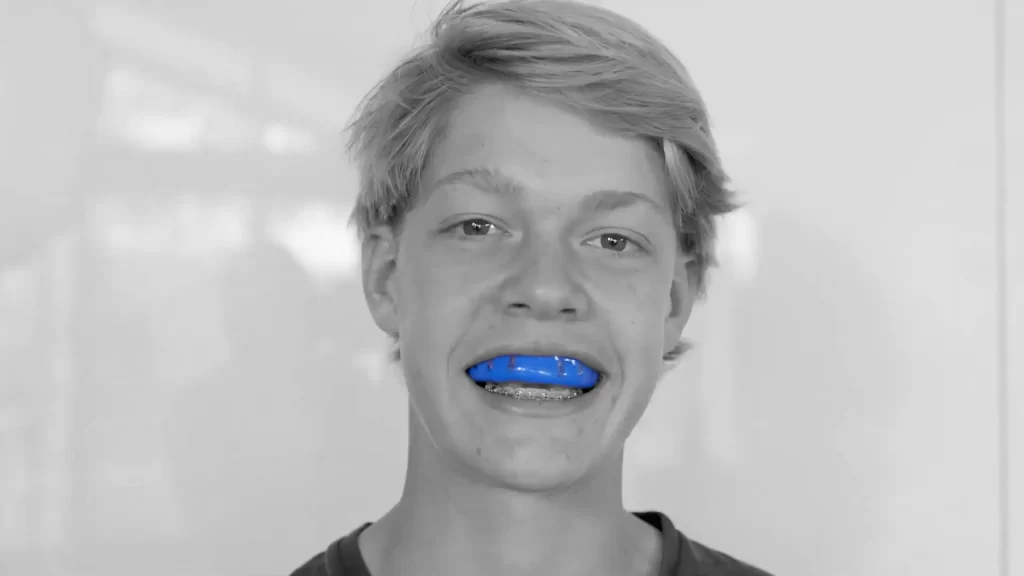
Why Braces Increase the Risk of Soft Tissue Injury
Orthodontic treatment can create some unique challenges when it comes to sport.
Unlike natural tooth surfaces, orthodontic appliances introduce brackets, wires and springs that can cause damage in an impact. If a player is struck in the mouth, these appliances can be forced into the surrounding soft tissues, causing injury to lips, cheeks and tongue.
There is also the risk of damage to the orthodontic appliance itself. Broken brackets, bent wires and damaged attachments can slow treatment down and may require additional orthodontic appointments and repairs.
This is why orthodontists and dental professionals consistently recommend that patients wear a securely fitting mouthguard whenever they participate in sports where there is a risk of contact or probable impact.
That is where a mouthguard specifically designed for braces has an advantage.
What Should You Look for in a Mouthguard for Braces?
When choosing a mouthguard for braces, look for:
- confirmation from the manufacturer that it is suitable for fixed braces or bonded attachments;
- secure retention without needing to clench or bite down to hold it in place;
- appropriate coverage of the teeth, braces and surrounding soft tissues;
- adequate thickness for protection;
- a smooth and comfortable fit that allows practical speech and breathing; and
- sufficient space around the orthodontic appliance and teeth that are expected to move; or, the ability to be re-moulded as tooth positions change during treatment.
A mouthguard that is simply larger or bulkier is not necessarily better suited to braces. It still needs to fit the individual mouth securely and accommodate the orthodontic appliance without creating unnecessary pressure or interference with treatment.
Our guide to choosing a mouthguard for braces and aligners looks at these considerations in more detail.
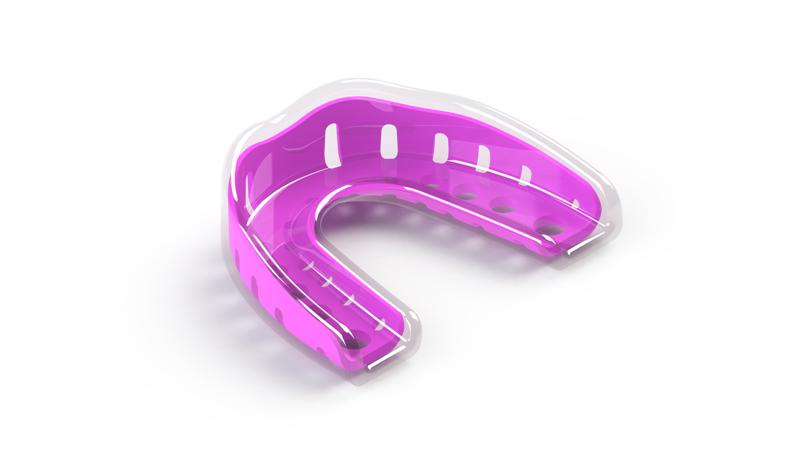
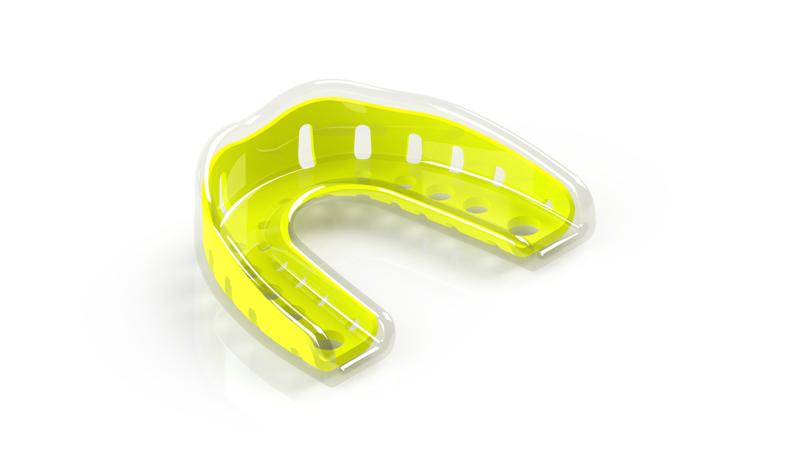
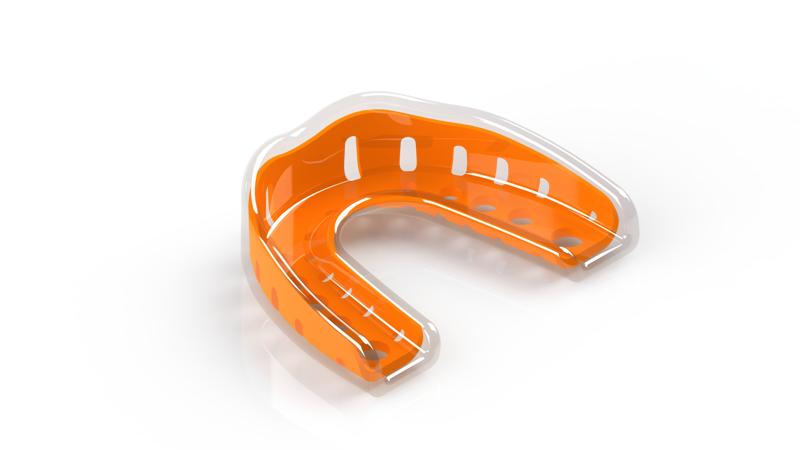
What Types of Mouthguards Are Available for Braces?
For a broader comparison beyond orthodontic mouthguards, see our guide to the different types of mouthguards.
| Feature | Silicone | Gel-Lined | Re-Mouldable |
| Accommodates braces | Yes | Sometimes | Depends on the product—check the manufacturer’s instructions. |
| Can adapt as teeth move | No | Limited | Yes, if designed for repeated re-moulding |
| Can be re-fitted | No | Not generally | Yes, if the manufacturer permits multiple moulds |
| Suitable during active orthodontic treatment | Sometimes | Check the manufacturer’s recommendations | Depends on the product—it must be specifically suitable for braces |
Silicone Orthodontic Mouthguards
Some orthodontic mouthguards are supplied in a pre-formed shape and are made from materials that do not mould around the wearer’s individual teeth and orthodontic appliance.
Designs can vary: some are made from silicone and incorporate a fixed channel to provide space for brackets and wires, while others simply use an enlarged or flexible pre-formed shape without a defined channel.
Although these designs may provide additional room for an orthodontic appliance, they do not adapt closely to the wearer’s individual tooth positions or bracket placement. This is particularly relevant because many orthodontic patients have crowded, protruding or unevenly positioned teeth—the very conditions being corrected through treatment. A generic pre-formed shape or standard channel may therefore provide space for the braces without closely conforming to the wearer’s actual dental structure.
For patients wearing clear aligners, the small attachments bonded to the teeth are substantially less prominent than conventional brackets. A large pre-formed orthodontic mouthguard or fixed channel may therefore be poorly matched to the much smaller profile of the teeth, aligners and attachments.
Because these mouthguards cannot be moulded to the wearer’s individual tooth and appliance positions, they will often feel bulky and can rely on gentle clenching to help keep them in place. While this may be acceptable for some wearers, it can affect retention, comfort, speech and overall wearability.
Gel-Lined Mouthguards
Another type of mouthguard is the gel-lined mouthguard. These typically combine a hard outer shell with a mouldable internal lining designed to shape around the teeth.
While these mouthguards can work well in some situations, they are often not suitable for wear with orthodontic appliances as the internal liner may not accommodate ongoing tooth movement. Many manufacturers of this type of mouthguard specifically advise that their products are not suitable for people wearing braces.
Re-Mouldable Mouthguards for Braces
Re-mouldable mouthguards offer a different approach, and the most common mouthguard recommended for orthodontics, yet not every re-mouldable mouthguard is suitable for fixed braces. The manufacturer should clearly confirm if their mouthguard is suitable for orthodontic appliances and provide specific fitting and removal instructions.
When a mouthguard is designed for repeated re-moulding and use with braces, its fit can be updated as the teeth move throughout treatment. This can help maintain retention, comfort and protection as the mouth changes.
Dental-Made Mouthguards During Orthodontic Treatment
Orthodontic treatment is dynamic. Teeth move, brackets are adjusted and wires or aligner stages change throughout treatment. Tooth movement is the ultimate intention of orthodontic treatment.
A dental-made mouthguard is fabricated from a model or digital record of the teeth at a particular point in time. Additional space can sometimes be incorporated around brackets and teeth that are expected to move. However, once the mouthguard has been fabricated, it cannot ordinarily be reheated and re-fitted by the wearer as tooth positions change.
As treatment progresses, the original spaces remain within the mouthguard and its fit may become less closely adapted. This is why orthodontic patients can benefit from a mouthguard that can be intentionally re-moulded as their teeth move.
Can a Mouthguard Damage Braces?
A mouthguard worn with braces should be designed and fitted so that it does not place unnecessary pressure on the teeth, brackets or wires or interfere with orthodontic treatment.
Follow the orthodontic fitting instructions carefully when fitting and removing Neomorph around fixed braces or bonded attachments.
Not every mouldable mouthguard is suitable for fixed braces. Check the manufacturer’s instructions before fitting and follow any braces-specific fitting and removal directions carefully. Athletes with unusual appliances, recently placed orthodontic components or more complex dental needs should speak with their orthodontist before choosing or fitting a mouthguard.
What Happens if Teeth Move During Treatment?
Tooth movement is the goal of orthodontic treatment, so it is normal and expected for the fit of a mouthguard to change as treatment progresses.
Regularly checking the fit of your mouthguard is important to ensure it continues to provide the retention, comfort and protection it was designed to deliver.
If the mouthguard no longer seats fully, feels unusually tight or loose, places pressure on the teeth or interferes with the orthodontic appliance, its fit should be reviewed. A mouthguard designed to be re-moulded can be intentionally reheated and fitted around the new tooth positions and this should ideally be done the day before use to ensure you are not feeling under pressure.
Can You Wear a Mouthguard with Clear Aligners?
Yes, but the removable aligner and the bonded attachments need to be treated differently.
Unless the treating orthodontist advises otherwise, the clear aligner should be removed before fitting or wearing a sports mouthguard. The small tooth-coloured attachments bonded to the teeth remain in place, so the mouthguard needs to be fitted around the teeth and attachments—not over the removable aligner.
Because tooth positions and aligner stages change throughout treatment, the mouthguard fit should be checked regularly and updated when necessary. Our guide to sports mouthguards and clear aligners explains fitting, attachments, tooth movement and mouthguard use in more detail.
Why I Developed NeoMorph Mouthguards
My interest in mouthguards developed through years of working as a Dental Hygienist in both general and orthodontic practice.
I repeatedly saw patients struggling with traditional over-the-counter (OTC) mouthguards during orthodontic treatment. Many found them bulky and uncomfortable. Others found they did not stay in place. Patients complained they could not communicate or breathe easily, and many removed them whenever they had the opportunity.
It seemed astonishing to me that after more than 50 years of mouldable over-the-counter mouthguards, we still had not adequately solved this problem for orthodontic patients.
This is what sent me searching for the ideal solution.
What we needed was a mouthguard that was comfortable to wear, protective, secure enough to stay in place and adaptable enough to accommodate tooth movement throughout orthodontic treatment. The goal was simple: to create the closest re-mouldable alternative possible to a dental-made mouthguard, while retaining the convenience and accessibility of an over-the-counter product.
While NeoMorph was created as a solution to these problems, the principles remain the same regardless of which mouthguard a patient chooses. The most important consideration is selecting a mouthguard that fits securely to stay in place, is comfortable enough to wear consistently, delivers adequate protection and can accommodate the tooth movement that occurs throughout orthodontic treatment.
Where Neomorph Fits
Neomorph Prodigy® was developed as a re-mouldable alternative for adults and young people aged 11 years and over, with or without fixed braces or bonded attachments.
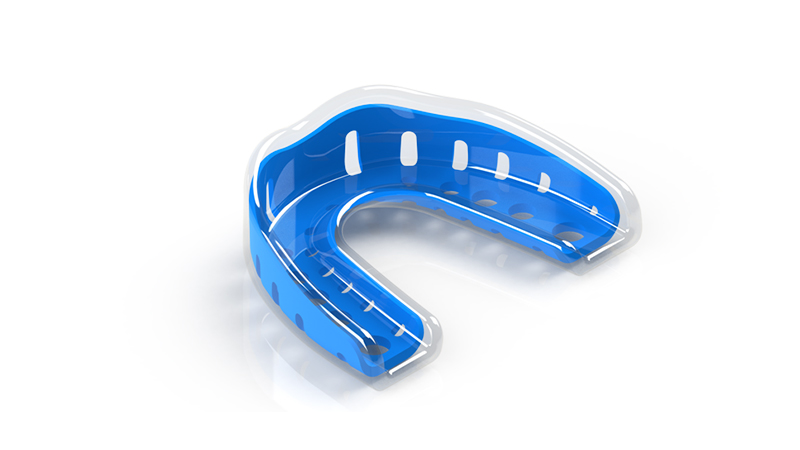
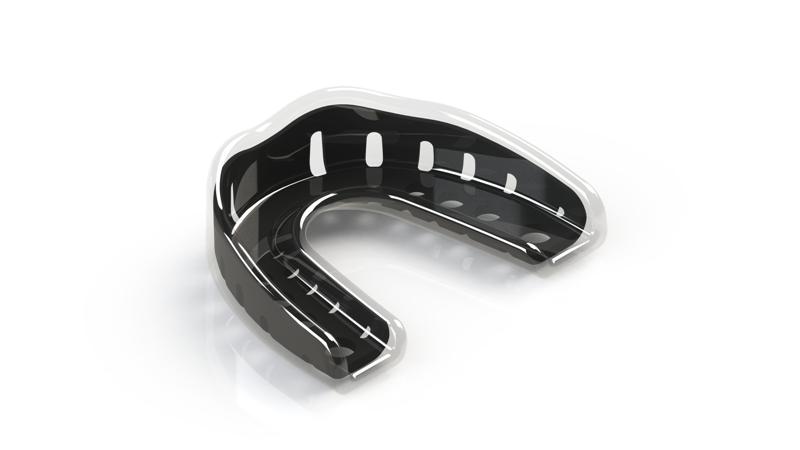
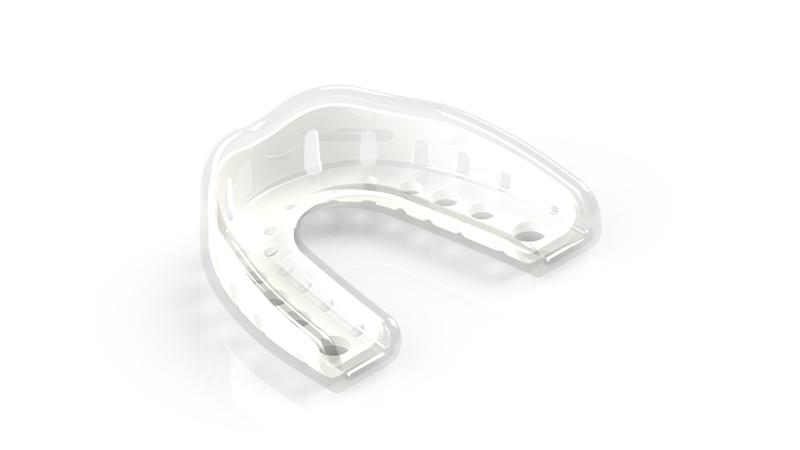
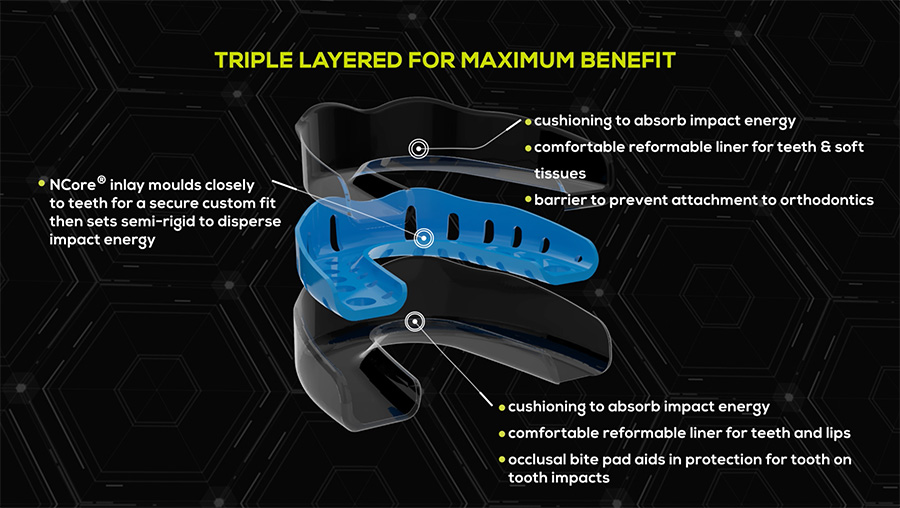
Its fully mouldable, triple-layer construction allows the entire mouthguard—including the NCore® internal layer—to form around the teeth and orthodontic appliance. Once cooled, NCore® becomes semi-rigid to help hold the fitted shape and disperse impact loading.
Neomorph can be intentionally reheated and re-moulded up to 10 times, allowing the fit to be updated as teeth move during orthodontic treatment. It can be fitted at home without requiring an impression, scan or dental appointment, while providing a more considered alternative for athletes who need or prefer an accessible over-the-counter mouthguard.
The Bottom Line
Orthodontic appliances introduce additional considerations for the teeth, surrounding soft tissues and the appliances themselves during sport. A securely fitting and appropriately designed mouthguard can help reduce these risks.
The right mouthguard should provide suitable coverage and protection, remain securely in place and be comfortable enough to wear throughout the entire game. During active orthodontic treatment, it should also accommodate—or be capable of adapting to—changes in tooth position.
A mouthguard can only provide protection when it is being worn. Finding an option that balances protection, secure fit, comfort and adaptability makes athletes more likely to keep it in place throughout training and competition.
Mouthguards worn during orthodontic treatment also need regular cleaning — so please see our blog on how to clean and care for your mouthguard.
About the Author
Amanda Trenerry is the Founder of NeoMorph Mouthguards and a Dental Hygienist with more than 30 years of clinical experience and over 38 years in the dental profession. Her experience spans across general dentistry, orthodontics, prosthodontics and dental education in both Australia and the UK. Amanda has spent much of her career educating patients about oral health and sports mouthguards and is passionate about improving access to comfortable, protective mouthguards for all athletes.

Disclaimer: This article is based on the professional experience and opinions of Amanda Trenerry, Founder of NeoMorph Mouthguards, gained through more than 30 years working within the dental profession, including extensive experience in orthodontics. The information is provided for educational purposes only and should not be relied upon as individual clinical advice. Patients should consult their own dental or orthodontic practitioner regarding their specific treatment and mouthguard requirements.