This guide covers how to clean & care for your mouthguard properly. It also covers how to store, travel with and replace your mouthguard to maintain hygiene, performance and good oral health.
A clean mouthguard is just as important as a well-fitted one. Without proper care, your mouthguard can quickly collect bacteria, yeasts, and mould that may lead to infections, bad breath and material breakdown. This guide explains why cleaning your mouthguard matters, what harmful microorganisms might be living on it, and the best cleaning routines to keep it fresh and safe.
You’ll also learn how to store, travel with, and know when it’s time to replace your mouthguard.
Protect your health, and your smile, by following these simple but effective hygiene tips.
How to Clean & Care for Your Mouthguard Properly (and Why It Matters)
Mouthguards are intended to protect your teeth, but if they are not cleaned properly they can harbour bacteria that cause infections, bad breath and irritation. Regular cleaning helps maintain your health and extends the life of your mouthguard.
What Lives on Your Mouthguard? Understanding Hidden Germs
A study titled Microbiota Found in Protective Athletic Mouthguards identified several types of bacteria, yeasts and moulds on athletic mouthguards.
Some of these microorganisms are opportunistic pathogens, meaning they may cause infection under certain conditions. Their presence on a mouthguard does not necessarily mean the wearer will develop an infection, however, regular cleaning and good hygiene practices are essential to help reduce microbial build-up.
How to Clean Your Mouthguard Properly
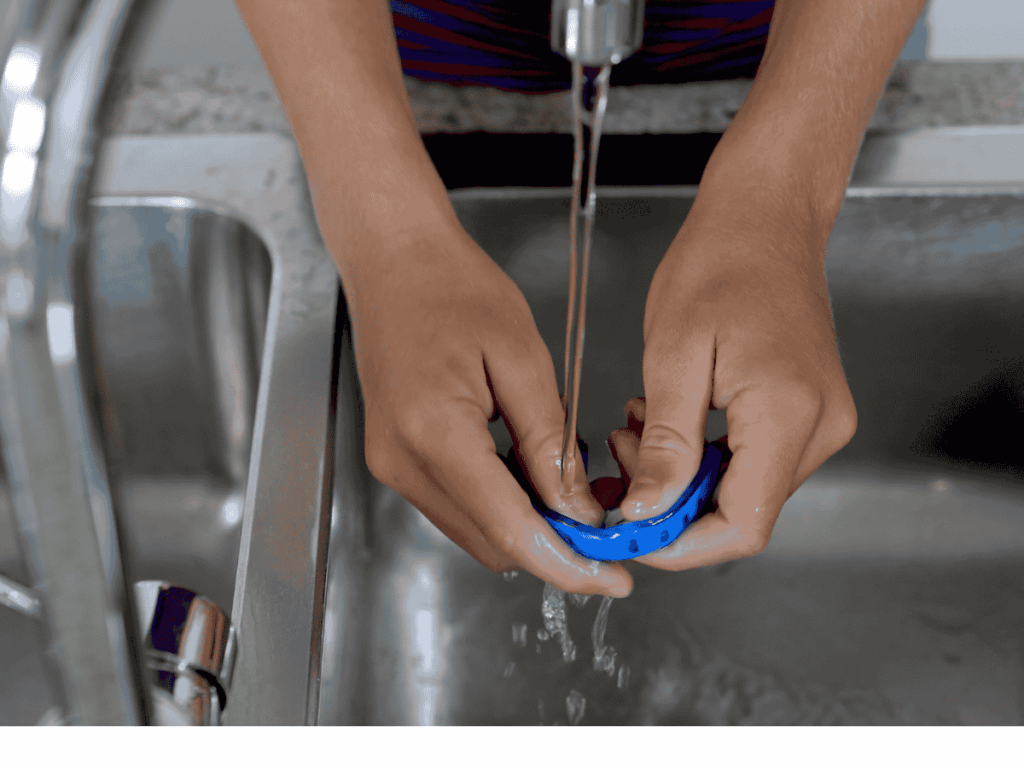
1. Rinse after use: Use cool water immediately to remove saliva and debris.
2. Clean when home: Use a soft toothbrush with mild soap or non-abrasive toothpaste. Avoid hot water.
3. Dry thoroughly: Let air dry completely before storing away.
4. Store properly: Use a ventilated mouthguard case, not a sealed bag.
5. Inspect regularly: Replace if there are signs of damage, wear, or warping.
How Often Should You Clean Your Mouthguard?
Clean your mouthguard after every use. Rinse immediately, then clean with a toothbrush, mild soap and water, and leave to air dry when you get home. Store in a dry ventilated case.
How to Store Your Mouthguard Correctly
Store your clean, dry mouthguard in a ventilated case. Avoid heat, humidity, and enclosed wet storage. It is important to also clean the mouthguard case regularly.
Travelling With Your Mouthguard
Store your mouthguard in a ventilated case. Avoid loose storage such as throwing it into your bag. Rinse after use, and place back into your case. If you are unable to rinse straight after use, place your mouthguard into the case and then attend to it (and your mouthguard case) when you get home.
Do not leave your mouthguard sitting in direct sunlight for long periods, such as on the dashboard of the car, or in extremely hot cars. The majority of mouthguards are made from a thermoplastic that can change shape when affected by high temperatures.
Mouthguard Care for Braces and Orthodontic Treatment
Neomorph Prodigy® is suitable for use with braces or clear aligner attachments (remove your aligners before fitting and wearing) and can be re-moulded up to 10 times as teeth move during orthodontic treatment.
Check that your mouthguard fits properly the day before training or competition. If your teeth have moved and your mouthguard no longer fits or feels comfortable, follow the approved re-moulding instructions.
Unless otherwise advised by your orthodontist or dentist, ensure you remove aligners and retainers before fitting or wearing your mouthguard.
For more information about mouthguards during orthodontic treatment, see our complete guide to mouthguards for braces.
Can You Boil a Mouthguard to Clean It?
No. Most mouthguards are made from thermoplastic materials, which are intended to change shape when heated. Boiling a mouthguard to clean or sterilise it may affect its fit and shape.
For routine cleaning, use cool water, a soft toothbrush and mild soap or non-abrasive toothpaste.
Neomorph Prodigy® uses a set procedure of heating during fitting and re-moulding. Always follow the approved product instructions when moulding or re-moulding your mouthguard.
When Should You Replace Your Mouthguard?
Inspect your mouthguard regularly and replace it if:
- It is cracked, split, perforated or significantly worn.
- Its shape has become distorted.
- The interlocking layers are separating.
- It can no longer be fitted securely.
Neomorph also recommends replacing your mouthguard annually, even if there are no obvious signs of damage.
Changes in fit are important — learn more about the importance of a properly fitting mouthguard in sports.
Mouthguard Cleaning Do’s and Don’ts
DO:
✓ Rinse after use
✓ Brush with a soft toothbrush and mild soap or non-abrasive toothpaste
✓ Air dry completely before storing
✓ Store in a ventilated case
DON’T:
✗ Use boiling water
✗ Use bleach or alcohol
✗ Store wet
✗ Use abrasive toothpaste
✗ Leave in hot environments
Neomorph Care Tip
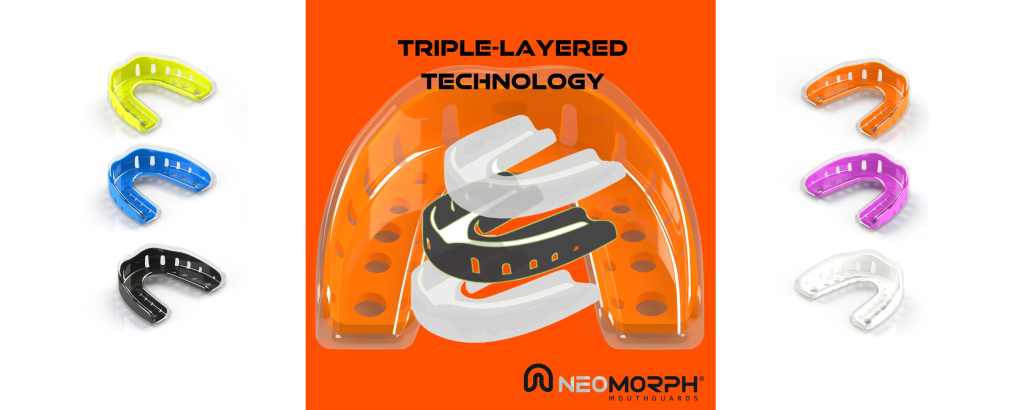
Neomorph Prodigy® features a fully mouldable, interlocking triple-layer design that functions as one integrated mouthguard. Like all mouthguards, it needs regular cleaning and appropriate storage to maintain its condition.
Rinse after use, clean with a soft toothbrush and mild soap or non-abrasive toothpaste, and allow the mouthguard to dry thoroughly before storing it in its ventilated case.
Rinse it. Clean it. Dry it. Store it. Inspect it.