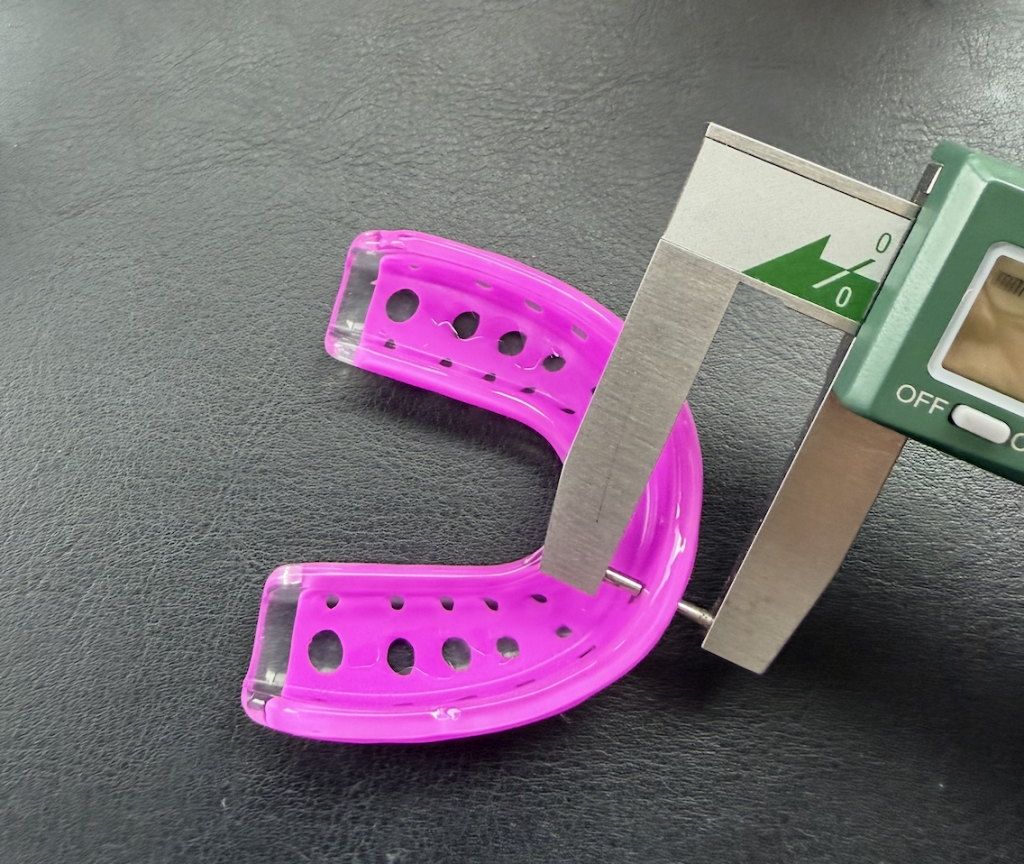
The Balance Between Bulk and Comfort
When it comes to sports mouthguards, thickness matters — but more thickness does not automatically mean a better mouthguard.
Research has shown that increasing the thickness of mouthguard material can improve its ability to absorb impact energy. The challenge is that as sports mouthguards become thicker, they can also become bulkier and less comfortable to wear.
This creates an important balance between protection and wearer acceptance.
A good mouthguard needs sufficient thickness and the right material properties to manage impact energy, while still being comfortable enough for an athlete to wear throughout training and competition.
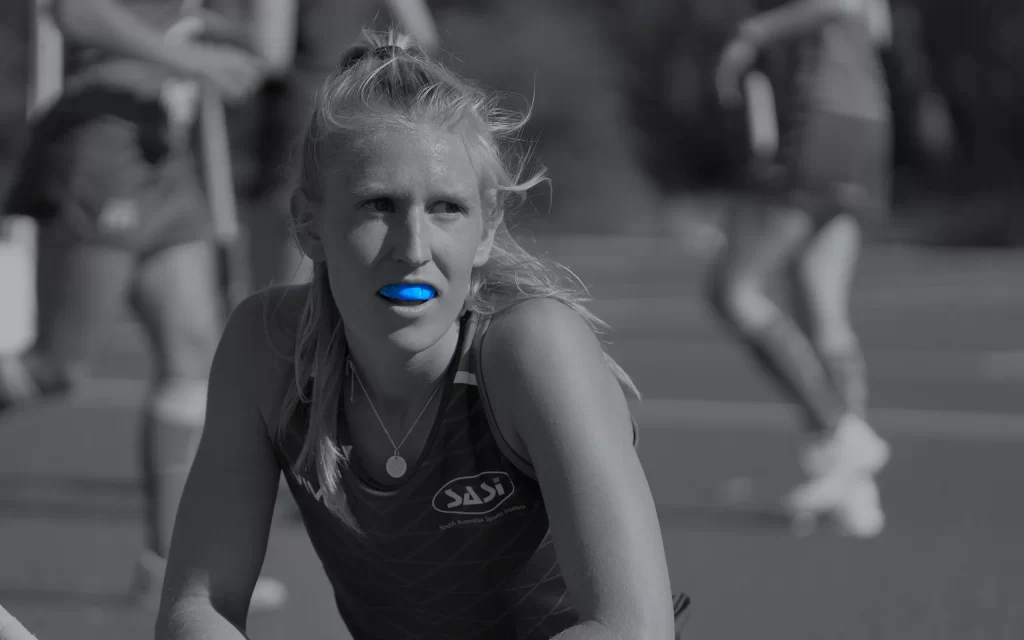
Why the Right Thickness Matters for Protection
A mouthguard protects by helping to absorb and distribute the energy generated during an impact.
Research into EVA (single material) mouthguards has found that material thickness is directly related to energy absorption, but also recognised that increasing thickness can reduce comfort and wearer acceptance. A commonly referenced study by Westerman et al. identified approximately 4 mm in impact-prone areas as a good compromise between protection and comfort for EVA mouthguards.
Thickness, however, is only one part of a sports mouthguard’s performance.
The materials used, how those materials work together, the fit of the mouthguard and its ability to distribute impact energy all contribute to how a sports mouthguard performs.
NeoMorph Prodigy® is 3.5 mm thick and uses a fully mouldable, triple-layer, dual-polymer design to balance protection with a slim, secure and comfortable fit.

Why Fit and Retention Matter Alongside Thickness
Thickness can contribute to impact absorption, but it is only one part of an effective mouthguard design. A mouthguard must also fit closely and remain securely positioned over the teeth during sport. If it feels bulky or loose, the wearer may need to clench or bite down to keep it in place, potentially affecting comfort, breathing and communication.
Fit, retention, coverage and material all influence how a mouthguard performs. Neomorph’s comparative testing found that thickness alone was not a reliable predictor of performance, reinforcing the importance of considering how the mouthguard’s complete structure works together.
Comfort also has a practical role because a mouthguard can only provide protection when it is worn.
Neomorph Prodigy® was therefore designed to balance secure fit, low bulk, comfort and protection rather than relying on increased thickness alone. At approximately 3.5 mm, it provides protective material coverage while minimising unnecessary bulk.
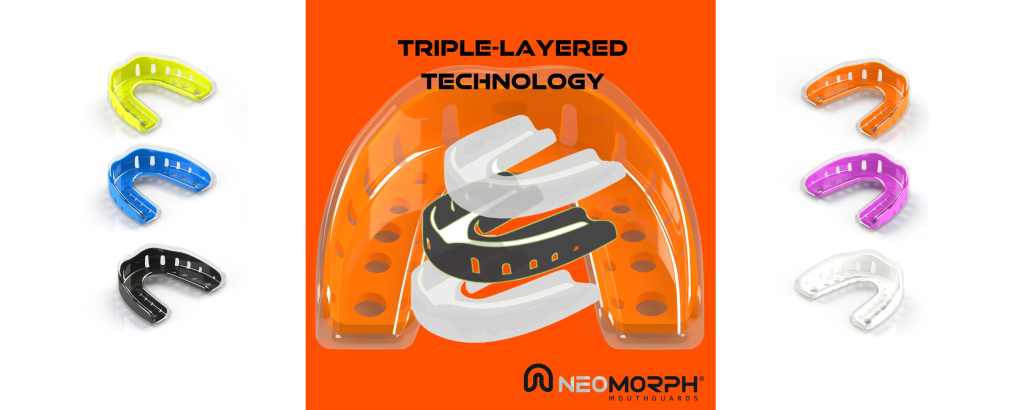
The Comfort Benefit: A Soft, Smooth Outer Layer
Comfort is influenced by more than thickness. The materials that sit against the lips, cheeks and teeth also affect how a mouthguard feels during sport.
The Neomorph® mouthguard features a soft, smooth outer layer for comfort against the lips and cheeks, together with a soft bite pad that cushions between the upper and lower teeth.
Because the entire mouthguard is heat-mouldable, Neomorph does not require a hard, bulky outer casing or frame that could restrict how closely it conforms around the teeth. This allows the layers to mould together while retaining the structure needed for protection.
At its core is the NCore® inner layer, which softens when heated and moulds closely around the teeth. As it cools, it becomes semi-rigid, helping the mouthguard maintain its shape and remain securely positioned during wear.
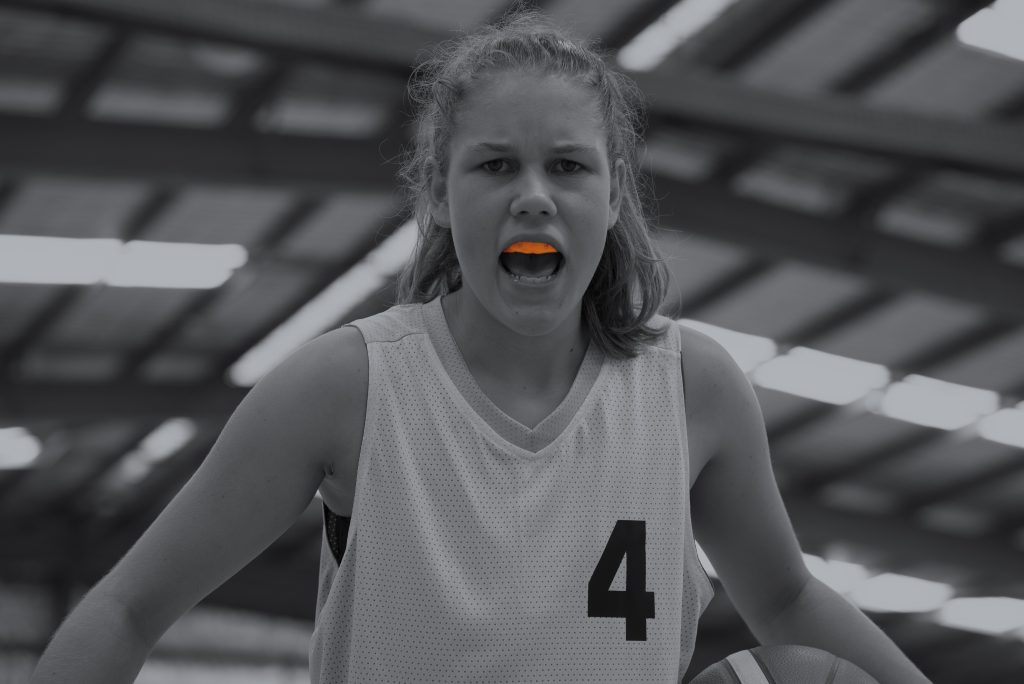
Conclusion: Protection and Comfort Should Work Together
Athletes should not have to choose between a mouthguard that feels protective and one they are comfortable wearing.
The best result comes from balancing appropriate thickness, effective materials, secure fit and comfort.
At 3.5 mm, the NeoMorph Mouthguard combines a fully mouldable triple-layer design with soft EVA inner and outer layers, an NCore® core and a soft bite pad to provide protection without unnecessary bulk.
Protection and comfort should work together — and that balance is exactly what NeoMorph was designed to achieve.
Reference: Westerman B, Stringfellow PM, Eccleston JA. EVA mouthguards: how thick should they be? Dental Traumatology. 2002;18(1):24–27.
ABOUT THE AUTHOR
Amanda Trenerry
Founder & CEO NeoMorph Mouthguards
Registered Dental Hygienist
Amanda has worked in dentistry since 1985 and has been a Registered Dental Hygienist for more than 30 years. Her career spans general dentistry, orthodontics, prosthodontics, and public and private practice in Australia and the UK, as well as lecturing and clinical tutoring in oral health in Australia.

Working in orthodontics, she saw first-hand how often athletes struggled with bulky, loose and uncomfortable over-the-counter mouthguards. She founded NeoMorph to create a re-mouldable mouthguard people are happy to wear.
Today, NeoMorph is worn by athletes aged 11 and over, with or without braces, and is stocked by retailers, pharmacies, and dental and orthodontic practices.
Disclaimer: This article is based on the professional experience and opinions of Amanda Trenerry, Founder of NeoMorph Mouthguards, gained through more than 30 years working within the dental profession, including extensive experience in orthodontics. The information is provided for educational purposes only and should not be relied upon as individual clinical advice. Patients should consult their own dental or orthodontic practitioner regarding their specific treatment and mouthguard requirements.