
As a sportsperson, protecting your teeth is crucial to your overall health and well-being. Mouthguards are important in preventing dental injuries during contact sports, and its important to understand that they are not created equal.
In this post, we will discuss the three different types of mouthguards and their advantages/disadvantages to help you make an informed decision on which one is right for you.
We will also introduce you to the Neomorph Mouthguard that positions itself as a 4th option. A hybrid of the dental made mouthguard and the mouldable store-bought mouthguard, incorporating the fit, comfort and protective qualities of the dental-made mouthguard mixed with the convenience, price-point and ability to remould of the “over-the-counter” (OTC) store bought mouldable mouthguard.
This overview sits within our complete mouthguard guide, which explains how different mouthguard types compare across sports and age groups.
1. Types of Mouthguards: Professionally made mouthguards (dental-made)
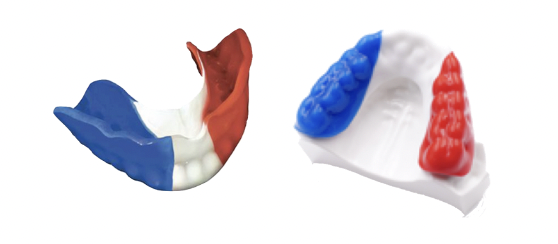
The professionally made mouthguard is the most custom fitting of all mouthguards and is the preferred choice of the Australian Dental Association (ADA). This type of mouthguard offers maximum protection by holding firmly in place. The manufacturing process involves taking an impression or scan of the sports persons mouth, preparing a plaster or 3D model, heating up the mouthguard material, and then a final pressure or vacuum forming procedure that pushes or vacuums the mouthguard material over the model. The protection of this style of mouthguard can be increased by adding 2 or 3 layers of material sequentially making it thicker for heavier hitting sports.
The downsides of custom-made mouthguards are that they require an impression or scan, take time to fabricate, are more costly than their OTC counterparts, and don’t change once formed, which is not the most practical option for patients undergoing orthodontic treatment as their teeth are intended to move throughout the treatment . Each of the manufacturing steps have a direct influence on the thickness and the final fit of the mouthguard and while there are guidelines for making laboratory made mouthguards, research (including our own independently conducted testing) has consistently shown that a custom made mouthguards will often differ in protection between technicians.
2. Types of Mouthguards: Preformed “off the shelf” stock mouthguards

The preformed “off the shelf” mouthguard is just as it sounds. It is a one-size-fits-all loose plastic overlay of the teeth, made from a thermoset or non-mouldable material. You simply buy it off-the-shelf, open the packet and put it in your mouth. The downside of these guards is that they are bulky and loose fitting, making them difficult keep in place, talk and breathe.
3. Types of Mouthguards: Mouldable mouth-formed mouthguards

The mouth-formed mouthguard, sometimes referred to as a “boil & bite mouthguard”, is made from a thermoplastic material that becomes soft and pliable when heated and can be shaped around the teeth using firm finger pressure and mouth suction.
Boil-and-bite mouthguards have been part of the evolution of sports mouthguards since the 1960s. This can be further explored in our blog on the history of mouthguards.
This style of mouthguard can vary somewhat with most being classified into 3 main types.
1) it will be made of a single mouldable material.
2) it will primarily be made from a mouldable material yet incorporate a non-mouldable hard insert, casing or attachment for added protection.
3) it consists of a hard non-mouldable outer casing with a thermoplastic or mouldable layer inside that you bite into.
4) There is a now a 4th option which we discuss separately below – the Neomorph Mouthguard which incorporates a completely embedded structural layer and is entirely mouldable.
Research tells us that this style of mouldable mouthguard is the most widely worn mouthguard of all the 3 mouthguards available for a variety of reasons… not least of all accessibility, convenience, cost and its ability to remould.
It is also often the “go-to” mouthguard that clinicians will recommend for patients undergoing orthodontic treatment as it can be remoulded as their teeth move throughout treatment. Please note: It is important to ensure that the mouthguard manufacturer confirms that the mouthguard can be worn with braces and/or aligners as many cannot.
The downside of these guards is that they are typically bulky, uncomfortable, and don’t fit well. When a mouthguard is bulky and uncomfortable it can interfere with breathing, communicating and ultimately performance, and when a mouthguard doesn’t fit well, it will move or even dislodge on impact which reduces protection and can negate the very reason we wear a mouthguard in the first place.
We’ve all seen kids and professional athletes hanging their mouthguards out of their mouths, removing them to talk and sticking them into a sock before a shot at goal.
Learn more about the relationship between mouthguard thickness and comfort.
4. The Neomorph Mouthguard

Neomorph was designed and developed by a dental hygienist to be a hybrid of the dental-made mouthguard and the store bought mouthguard. The ultimate re-mouldable version of the custom fitting, comfortable and protective dental-made mouthguard combined with the convenience, price-point and ability to remould of the “over-the-counter” store bought mouthguard.
The Neomorph Mouthguard incorporates a semi-rigid yet mouldable layer for added protection and differs from the majority of mouldable mouthguards in that the entire Neomorph mouthguard is mouldable… meaning there are no uncomfortable bits sticking in to you or bulking out the mouthguard.
Neomorph will conform securely around teeth to feel smooth and comfortable and at 3.5mm thin it is tougher than it’s thicker counterparts and absorbs impacts extremely well.
Neomorph Prodigy can also be worn by all sportspeople over 11 years of age with and without braces/aligners.
In conclusion, choosing the right mouthguard is crucial to your overall dental health and well-being. Each type of mouthguard has its advantages and disadvantages. When choosing a mouthguard you should always ensure it fits well. A simple test is to try to dislodge the mouthguard from behind your top front teeth with your tongue. If you can dislodge your mouthguard easily it is not fitting securely enough and you should remould or replace it. A good mouthguard should also be comfortable, provide adequate protection and enable communication and easy breathing during any sport you are playing.
This overview of mouthguard types forms part of our complete mouthguard guide to choosing the right mouthguard, which explains how fit, materials and protection levels vary across sports, age groups and mouthguard varieties.
Whichever mouthguard you choose, proper care is essential to maintaining hygiene and prolonging its lifespan. Read our guide on how to clean and care for your mouthguard to keep yours in the best possible condition.
About the Author
Amanda Trenerry is the Founder of NeoMorph Mouthguards and a Dental Hygienist with more than 30 years of clinical experience and over 38 years in the dental profession. Her experience spans across general dentistry, orthodontics, prosthodontics and dental education in both Australia and the UK. Amanda has spent much of her career educating patients about oral health and sports mouthguards and is passionate about improving access to comfortable, protective mouthguards for all athletes.

Disclaimer: This article is based on the professional experience and opinions of Amanda Trenerry, Founder of NeoMorph Mouthguards, gained through more than 30 years working within the dental profession, including extensive experience in orthodontics. The information is provided for educational purposes only and should not be relied upon as individual clinical advice. Patients should consult their own dental or orthodontic practitioner regarding their specific treatment and mouthguard requirements.