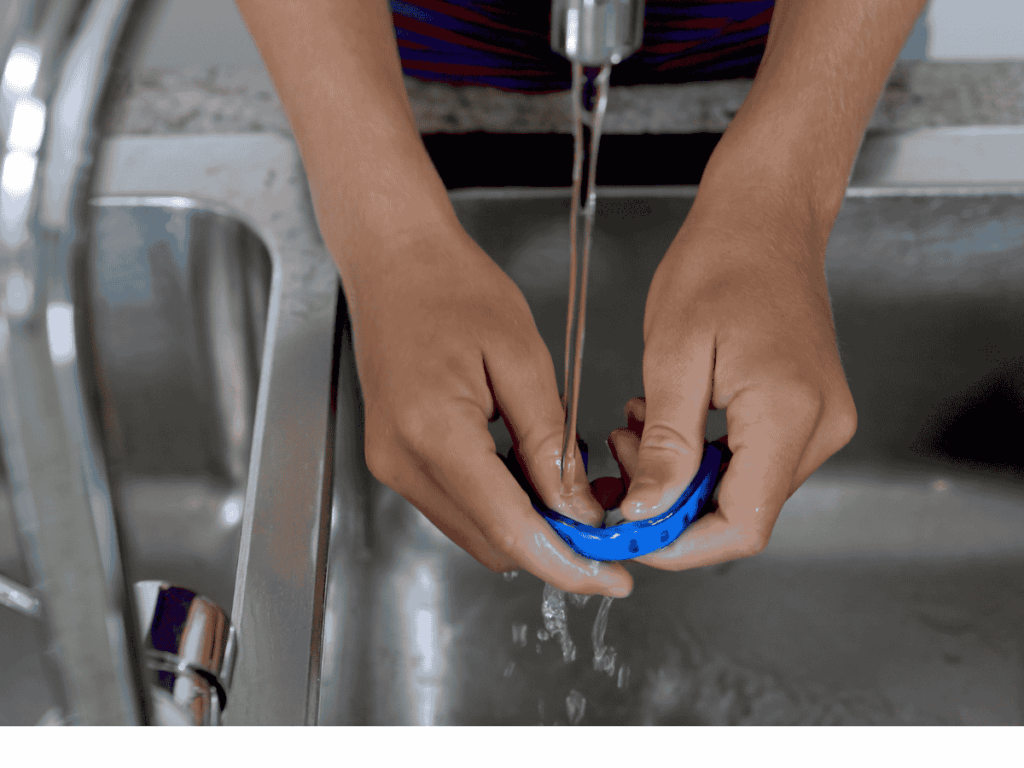
This guide covers how to clean, store, travel with, and replace your mouthguard to maintain hygiene, performance, and oral health.
A clean mouthguard is just as important as a well-fitted one. Without proper care, your mouthguard can quickly collect bacteria, yeasts, and mould that may lead to infections, bad breath, and material breakdown. This guide explains why cleaning your mouthguard matters, what harmful microorganisms might be living on it, and the best cleaning routines to keep it fresh and safe. You’ll also learn how to store, travel with, and know when it’s time to replace your mouthguard.
Protect your health, and your smile, by following these simple but effective hygiene tips.
How to Clean a Mouthguard Safely and Effectively (and Why It Matters)
Mouthguards protect your teeth, but if they are not cleaned properly they can harbour bacteria that cause infections, bad breath, and irritation. Regular cleaning helps maintain your health and extends the life of your mouthguard.
What Lives on Your Mouthguard? Understanding Hidden Germs
A study titled “Microbiota Found in Protective Athletic Mouthguards” found that mouthguards can host a range of bacteria, yeasts, and molds, including opportunistic pathogens that may cause infection.
Common microorganisms found included:
• Gram-positive cocci: Staphylococcus spp. and Micrococcus spp.
• Gram-positive bacilli: Brevibacterium spp. and Cellulomonas spp.
• Yeasts: Candida parapsilosis, Rhodotorula mucilaginosa
• Moulds: Cochliobolus spp., Penicillium chrysogenum
The takeaway? Germs thrive in unclean mouthguards, making good hygiene & cleaning practices essential.
How to Clean Your Mouthguard Properly
1. Rinse after use: Use cool water immediately to remove saliva and debris.
2. Clean when home: Use a soft toothbrush with mild soap or non-abrasive toothpaste. Avoid hot water.
3. Dry thoroughly: Let air dry completely (about 30 mins) before storing.
4. Store properly: Use a ventilated mouthguard case – not a sealed bag.
5. Soak occasionally: Disinfect using an antibacterial mouth rinse or denture-cleaning tablet once a month to help reduce pathogens.
6. Inspect regularly: Replace if there are signs of damage, wear, or warping.
How Often Should You Clean Your Mouthguard?
Clean your mouthguard after every use. Rinse immediately, then clean with a toothbrush, mild soap and water, and sit to air dry when you get home. Store in a dry ventilated case.
Daily Mouthguard Cleaning Routine
– Rinse with cool water after use.
– Brush with mild soap or non-abrasive toothpaste.
– Air dry for at least 30 minutes.
Monthly Deep Cleaning Options
– Option 1: Denture-cleaning tablet in warm water (5–10 mins).
– Option 2: Soak in vinegar/water, then peroxide/water.
– Option 3: Use antibacterial spray or foam designed for oral appliances.
Avoid: boiling water, bleach, or alcohol.
How to Store Your Mouthguard Correctly
Store your clean, dry mouthguard in a ventilated case. Avoid heat, humidity, and enclosed wet storage. It is important to also clean the mouthguard case regularly.
Travelling With Your Mouthguard
Store your mouthguard in a ventilated case. Avoid loose storage such as throwing it into your bag. Rinse after use, and place back in to your case. If you are unable to rinse straight after use, place your mouthguard into the case and then attend to it when you get home. Do not leave in direct sunlight for long periods i.e on the dashboard of the car, or in extremely hot cars. The majority of mouthguards are made from a thermoplastic that can change shape when affected by high temperatures.
Mouthguard Care for Braces and Orthodontic Treatment
Rinse your mouthguard before and after wearing it. Place into your mouthguard case to protect it until you get home. Once home clean your mouthguard with a toothbrush, soap and water. Clean & dry your mouthguard case if dirty or wet. Allow both to air dry, and then store the mouthguard back in to your ventilated mouthguard case. This will help to reduce bacterial hosting and material degradation.
Neomorph is designed to be compatible with braces and aligners, and can be re-moulded without damaging brackets. If you have moving teeth, ensure your mouthguard is still fitting well the night before you need to wear it. If not you need to re-mould it so it does fit well.
Can You Boil a Mouthguard to Clean It?
No. Most mouthguards are made from a thermoplastic material, which means they change shape when heated. Boiling as a way of sterilizing will very likely affect the fit and shape. Use warm water, toothbrush and a non-abrasive soap. For a deep clean you can use denture tablets.
When Should You Replace Your Mouthguard?
Replace if it:
– is damaged or worn
– has lost its ability to reshape
– smells bad
– is more than 12 months old
Mouthguard Cleaning Do’s and Don’ts
DO:
✓ Rinse after use
✓ Brush with soft toothbrush & mild soap
✓ Air dry completely
✓ Store in a ventilated case ✓ Deep clean monthly
✓ Deep clean monthly
DON’T:
✗ Use boiling water
✗ Use bleach or alcohol
✗ Store wet
✗ Use abrasive toothpaste
✗ Leave in hot environments
Neomorph Care Tip
While Neomorph is a triple-layered mouthguard it is a single product with no edges or segments. Its seamless design helps resist bacterial build-up, yet proper hygiene is still essential for long-term safety and performance.
Neomorph Care Tip
Rinse it. Clean it. Dry it. Store it. Replace it.
Hygiene is part of looking after your protective equipment. Consistent care helps ensure your mouthguard performs as intended every time you wear it.
A clean mouthguard not only protects your teeth but also your health, focus, and confidence every time you step into the game.