
Independent Impact Testing & Performance
Mouthguard Testing & Performance
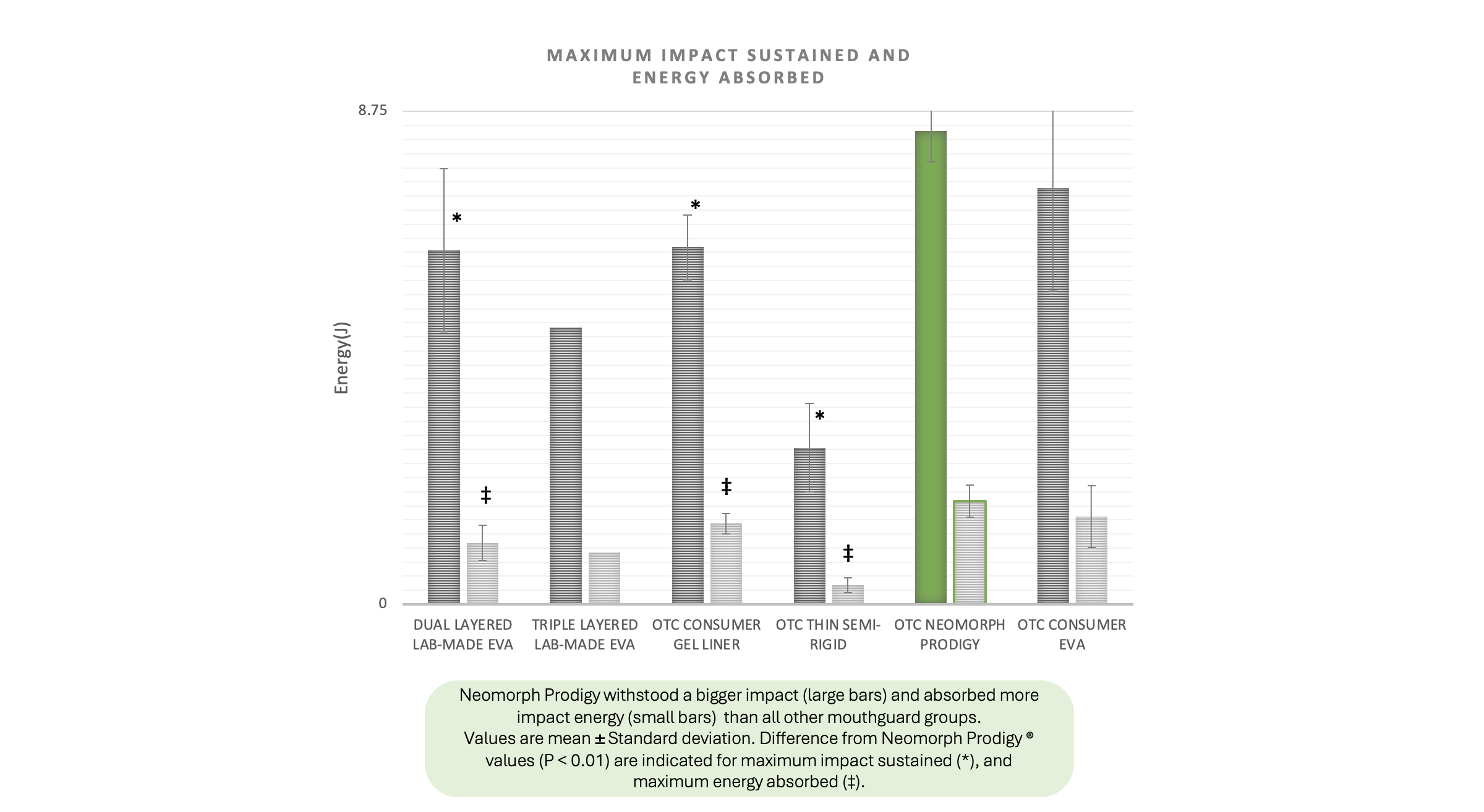
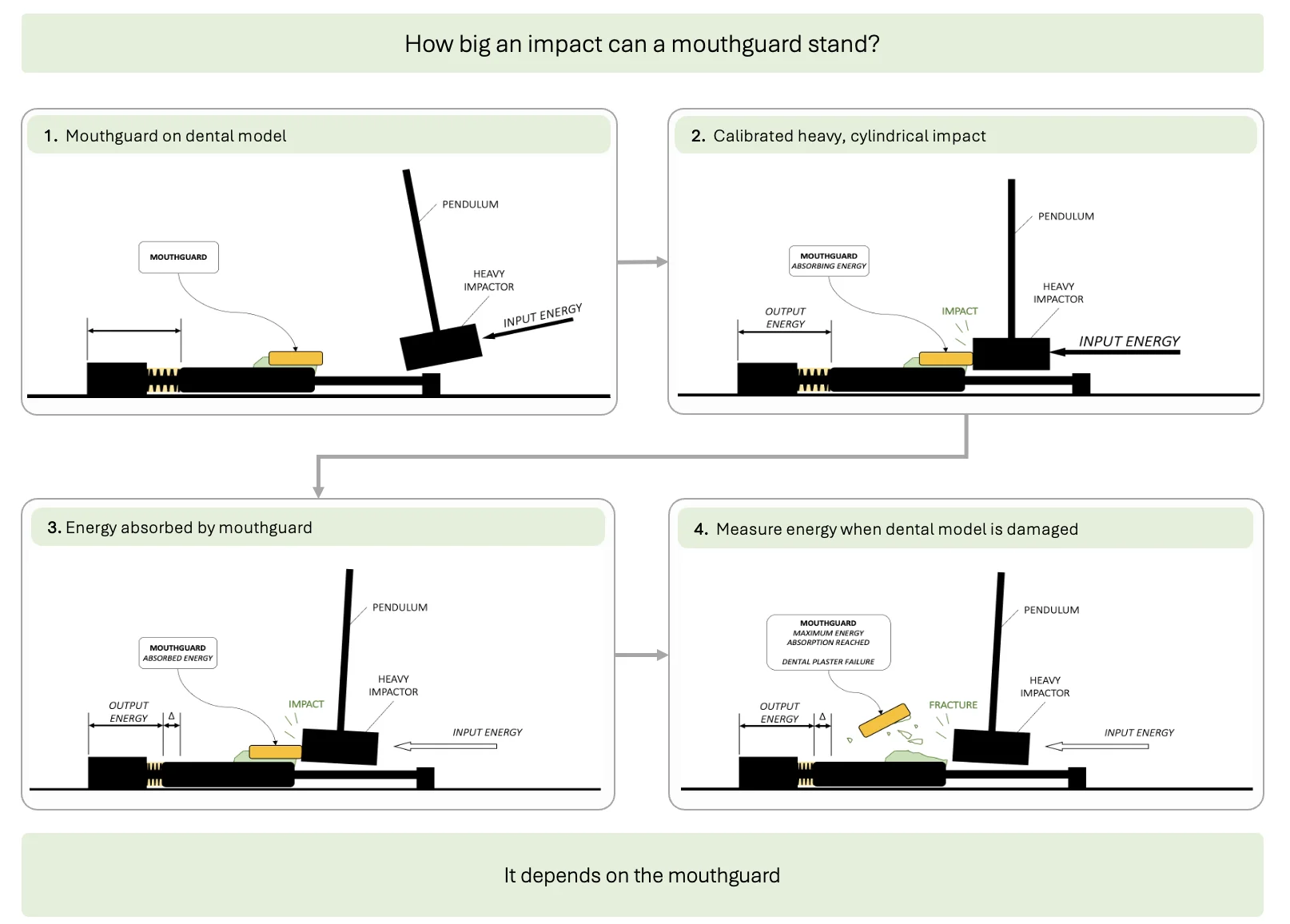
Independent laboratory testing evaluated NeoMorph Prodigy® alongside other mouthguard categories under controlled comparative impact conditions. Testing assessed impact performance, energy absorption, load distribution behaviour and material suitability using calibrated laboratory testing methods and standardised dental models.
The testing compared how different mouthguard constructions responded under identical laboratory impact conditions. This testing included popular OTC (over-the-counter) consumer mouthguards and laboratory-made mouthguards. Products were grouped into comparable mouthguard categories for analysis.
Testing assessed:
- Maximum impact sustained before dental model damage
- Energy absorption during impact
- Load distribution behaviour
Mouthguards must do two critical things.
Perform under impact and remain safe for prolonged intra-oral use.
Performance overview
Across the full test range, NeoMorph Prodigy® demonstrated high impact tolerance and effective energy absorption compared with other mouthguard categories tested.
In multiple trials, NeoMorph exceeded the maximum impact capacity of the test apparatus without damage to the dental model, indicating effective energy dissipation through load distribution rather than localised deformation.
Why load distribution matters
When an impact occurs, some energy is absorbed by the mouthguard while the remainder is transferred to the teeth and supporting structures.
Energy absorption testing and high-speed video testing indicated that higher-performing mouthguards tended to better distribute impact forces across more teeth and supporting structures, reducing localised pressure. By contrast, less protective designs tended to deform locally under impact, concentrating force in a smaller area and increasing localised force transfer to the dental model.
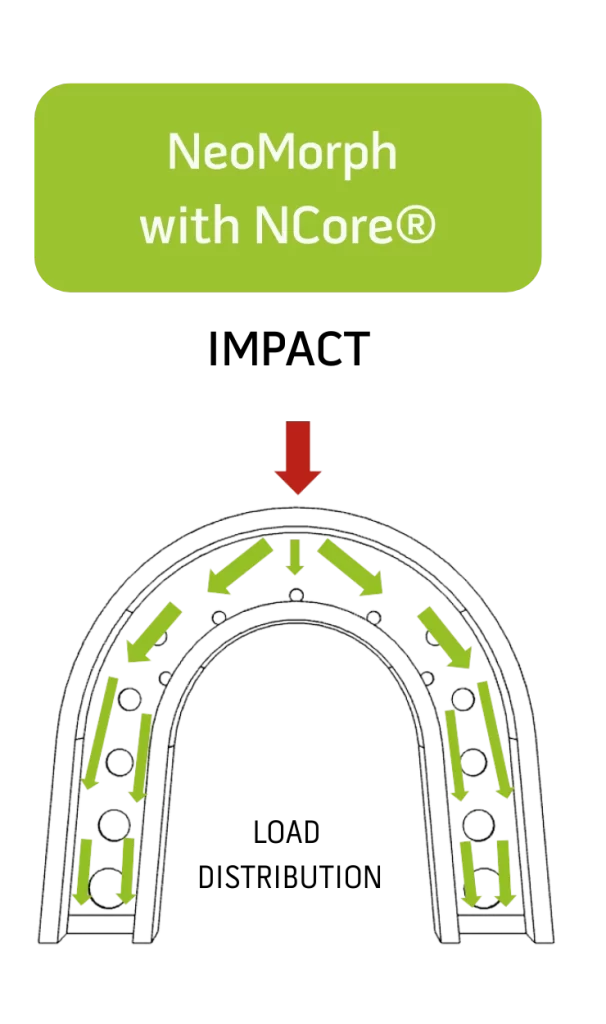
NeoMorph with NCore®
- Load distributed across a broader area
- Reduced localised deformation
- Structural stability under impact and higher tolerance to impact
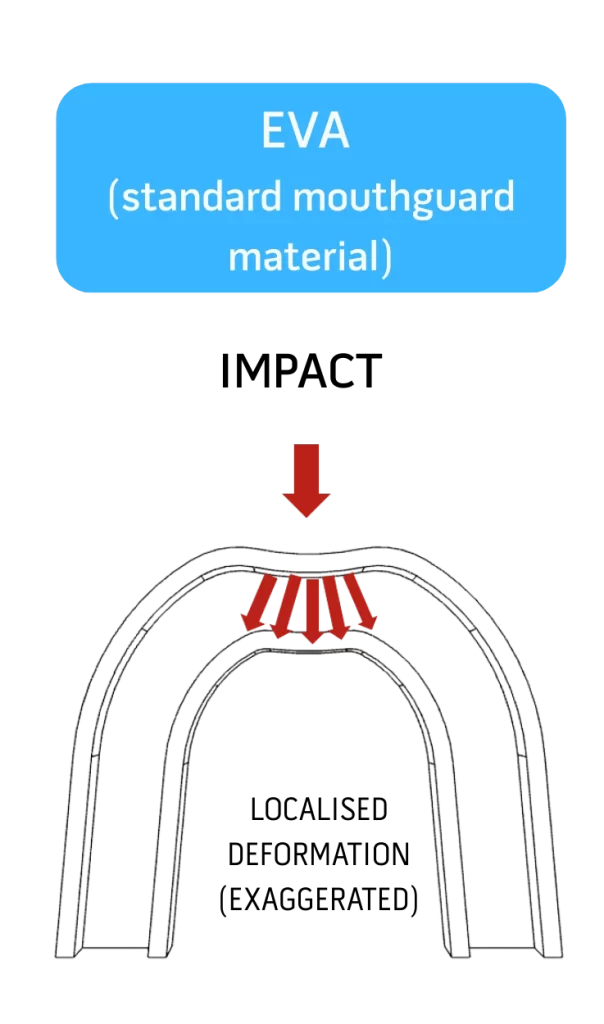
Standard EVA designs showed:
- Localised concaving at the point of impact
- Concentration of force onto fewer teeth
- Damage to the dental model at a smaller impact
(Diagram for illustrative purposes. Deformation exaggerated to demonstrate load behaviour.)
Seeing is believing
Seeing impact behaviour visually helps illustrate how different mouthguard designs respond under identical laboratory conditions.
The diagrams and videos below visually demonstrate how different mouthguard designs respond under identical laboratory impact conditions.
Neomorph Prodigy
- Mouthguard maintains shape under impact
- No pronounced concaving at the impact point
- Impact load visibly dispersed through the arch and engaging the molars
Standard EVA design
- Visible concaving at point of impact
- Plaster ejection observed behind the model
- Demonstrates localised force transfer to the dental model
Above
The slow-motion footage above illustrates how NeoMorph responds under a 4.5 joule impact.
*Note – the same impact event is replayed multiple times to allow close observation of deformation and load behaviour.
Below
The same 4.5 joule impact at normal speed with sound, recorded under identical test conditions.
Play with sound on to better appreciate the impact force.
Please note: The videos shown represent just over half of the total impact energy the NeoMorph Mouthguard sustained during this test series.
Material & Safety Testing
All testing performed and described here was conducted under controlled, repeatable laboratory conditions.
Impact testing examines how a mouthguard responds under heavy impacts.
Material testing assesses the suitability of materials for prolonged intra-oral use.
Independent material and chemical safety testing was conducted by SATRA Technology, with assessment performed across its UK and Ireland laboratories, which specialise in consumer product safety and compliance for products intended for prolonged contact with the body.
Material testing evaluated suitability for intra-oral use, including assessment of:
- Chemical safety parameters
- Moisture absorption characteristics
- Tensile strength and material stability
- Structural integrity under simulated conditions
NeoMorph satisfied or surpassed all materials testing requirements for extended intra-oral application under controlled testing conditions.
Important testing context
The results presented on this page relate specifically to the controlled laboratory test configuration described.
Testing was conducted using calibrated impact apparatus and identical plaster dental models to allow direct comparison between mouthguard types.
Real-world impacts vary depending on sport, force direction, athlete anatomy and use conditions. Laboratory testing cannot replicate every in-game scenario.
Testing results should not be interpreted as a guarantee against dental or other injuries.
The results shown are comparative within this specific test method and form one part of NeoMorph’s overall product evaluation and design process.
Further testing information
For further information regarding the independent testing methodology and results, please contact NeoMorph Mouthguards.